
Frequently Asked Customer Questions About Renting Budget, Economy, Compact, and Lower-Mid-Size Rental Cars
At first glance, car rental may seem like a straightforward service: you select the appropriate vehicle category, make a reservation, use the car, and then return it when you're finished. In practice, however, most misunderstandings and customer complaints arise because renters are not fully familiar with the rental terms and conditions, the differences between vehicle categories, or the insurance and security deposit requirements.
This is particularly true for budget, economy, compact, and lower-mid-size rental cars, as these are the most popular and frequently booked vehicles on the market. Customers often make their choice based solely on price, while important factors such as luggage capacity, travel comfort, insurance coverage, and expected driving conditions receive less attention. As a result, the reserved vehicle may not meet the actual needs of the trip, or unexpected costs may arise during the rental period.
The foundation of a successful car rental experience is having the right information. It is important to understand that when making a reservation, you are usually selecting a vehicle category rather than a specific car model, how the security deposit and insurance systems work, under what conditions the vehicle can be driven abroad, and what to pay attention to during vehicle collection and return. This knowledge not only helps avoid unpleasant surprises but also ensures that the rental experience delivers the flexibility and convenience that have made car rental one of the most popular mobility services today.
In the following guide, we answer the most frequently asked questions about Economy, Compact, and lower-mid-size rental cars from a professional perspective. The goal is not only to provide basic information but also to share practical insights that genuinely help customers choose the right vehicle and enjoy a smooth, hassle-free rental experience.
What Vehicle Will I Actually Get If I Book an Economy Category Car?
In most cases, customers do not reserve a specific vehicle model but rather a vehicle category. This is an important distinction compared to purchasing a car because the purpose of a reservation system is not to guarantee a specific model but to provide a vehicle with a certain size, equipment level, and performance standard.
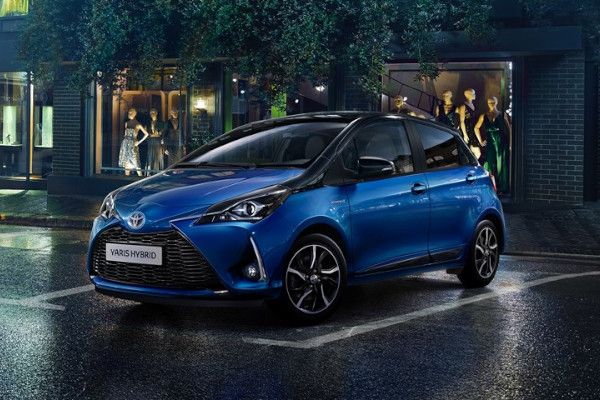
For example, when you see "Toyota Yaris or similar" in a rental offer, the Toyota Yaris serves only as a reference model. The rental company’s commitment is to provide a vehicle of similar size, passenger capacity, and luggage space.
Rental companies continuously manage their fleets due to maintenance, repairs, seasonal demand, and vehicle returns. As a result, it would be practically impossible from a business perspective to guarantee the same specific model for every reservation.
If no vehicle is available in the reserved category, the rental company is required to provide a vehicle from the same category or a higher category. A lower-category vehicle may only be supplied with the customer's consent.
From the customer's perspective, the most important factors are not the brand or model but the vehicle category's technical specifications: passenger capacity, luggage space, transmission type, and fuel type. These are the details that should always be checked before booking rather than focusing on the specific vehicle shown in promotional images.
What Is the Difference Between Economy, Compact, and Lower-Mid-Size Cars?
Many customers judge vehicle categories solely based on price, but the real differences lie in usability, comfort, and capacity.
- Economy Category: Economy vehicles are primarily designed for city driving and shorter journeys. Their compact dimensions make them easy to park and fuel-efficient, but they offer limited luggage capacity and rear passenger space.
- Compact Category: Compact vehicles represent a significant step up. They are more comfortable on longer trips, more stable on highways, offer better rear legroom due to their longer wheelbase, and provide noticeably larger luggage compartments. During a journey with four passengers, the difference becomes apparent after just a few hours of travel.
- Lower-Mid-Size Category: This category includes traditional family cars. Not only are these vehicles larger, but they also offer improved noise insulation, better suspension quality, enhanced safety features, and a superior overall travel experience. For journeys involving hundreds of kilometers or family vacations, a lower-mid-size vehicle is generally a much better choice than an Economy car, even if the rental price is somewhat higher.
Can Four Adults and Their Luggage Fit Into a Small Rental Car?
This is one of the most commonly misunderstood questions in car rental.
A manufacturer's "5-seater" designation refers to legal and technical capacity, not necessarily comfortable travel conditions. While four or even five adults can physically fit inside an average Economy vehicle, that does not mean it is ideal for long-distance travel or airport transfers.
The main limitation is usually not passenger space but luggage capacity. A group of four travelers will typically have at least four medium or large suitcases. In many Economy vehicles, these simply do not fit into the trunk.
When luggage must be placed inside the passenger compartment, comfort is reduced and safety may also be affected.
Our practical recommendation: From a professional standpoint, a Compact category vehicle should be considered the minimum for four adults traveling with full holiday luggage. If the trip is long or the number of bags exceeds four, a lower-mid-size category is generally the better option. When selecting a vehicle category, luggage volume is just as important as the number of passengers.
How Large Is the Trunk of an Economy Category Vehicle?
Trunk size is one of the most underestimated factors when renting a car. Most customers focus on passenger capacity, yet real-world practicality depends just as much on the amount and size of the luggage being transported.
- Most Economy vehicles offer between 200 and 300 liters of trunk space. While this may seem sufficient on paper, it provides limited real-world capacity. Typically, such a vehicle can comfortably accommodate two cabin-sized suitcases or one large and one smaller suitcase.
The issue often becomes apparent during airport pickups. A group of four travelers usually arrives with at least four medium-sized suitcases, which often exceed the practical capacity of an Economy vehicle’s trunk.
It is also important to remember that manufacturer luggage-capacity figures often assume loading up to the roof, which is generally not advisable for safety reasons.
When choosing a rental category, customers should consider expected luggage volume just as carefully as passenger numbers.
Is It Worth Choosing a Compact Category for a Small Additional Fee?
From a professional perspective, the answer depends entirely on how the vehicle will be used.
- If the vehicle is primarily intended for city driving, short journeys, or one or two passengers, an Economy car is usually sufficient.
- However, if the vehicle will be used for highway travel, journeys covering hundreds of kilometers, or trips involving multiple passengers, the advantages of a Compact vehicle often far outweigh the additional rental cost.
Compact vehicles typically feature longer wheelbases, more stable suspension systems, and better sound insulation. These characteristics significantly improve comfort during longer journeys. They also provide larger luggage compartments, reducing the need for compromises when packing.
Our professional experience: Fleet management data consistently shows that most post-rental customer complaints are not related to pricing but rather to customers selecting a vehicle category that was too small for their actual travel requirements. Therefore, when the price difference is modest, a Compact category vehicle usually offers better overall value for money.
Will I Get a Manual or Automatic Transmission Vehicle?
The transmission type is not simply a comfort feature—it is one of the fundamental technical specifications of your reservation. If your booking confirmation states that you have reserved an automatic transmission vehicle, the rental company is required to provide an automatic vehicle. The same principle applies to manual transmission cars. These two categories are treated separately within rental systems because they involve different customer preferences and often significant price differences.
In European rental fleets, manual transmission vehicles still make up the majority of available cars, which means automatic models are typically available in more limited quantities. As a result, automatic vehicles generally command higher rental rates. If the specific automatic vehicle you reserved is unavailable, the rental company must provide another automatic vehicle in the same or a higher category. A manual vehicle may only be offered as a replacement with the customer’s explicit consent.
It is also important to consider that driving habits vary significantly from country to country. While manual transmissions remain common throughout Hungary and many parts of Central Europe, rental fleets in North America, Canada, the United Arab Emirates, Australia, and many Asian countries consist predominantly of automatic vehicles. In these markets, manual cars may be unavailable or offered only in very limited numbers. Hungarian travelers visiting these destinations should therefore expect that automatic vehicles will be the standard option.
Our practical advice: Always verify that the transmission type is clearly stated in your booking confirmation. This is not only a comfort preference but also an important contractual and service-related specification. An unsuitable transmission type can significantly affect the driving experience, especially for drivers who are accustomed exclusively to either manual or automatic vehicles.
What Is the Average Fuel Consumption of a Small Rental Car?
Customers often rely on manufacturer fuel consumption figures, but real-world fuel usage depends primarily on driving conditions rather than official factory specifications.
A modern Economy-category gasoline vehicle typically consumes between 4 and 6 liters per 100 kilometers. Consumption tends to be higher in urban environments and lower during highway or rural driving. Hybrid vehicles often behave differently: they are exceptionally efficient in city traffic, where the electric motor frequently assists propulsion, but may consume more fuel on highways when electric assistance is less effective.
In rental situations, fuel consumption is heavily influenced by driving style, the number of passengers, luggage weight, and air-conditioning use. A fully loaded vehicle carrying four passengers and a full luggage compartment may consume 15–20% more fuel than average.
For this reason, fuel economy alone rarely justifies selecting the smallest vehicle category. The financial savings from reduced fuel consumption are often outweighed by the loss of comfort and practicality. Vehicle category selection should therefore be based primarily on actual travel requirements rather than fuel economy alone.
Do I Need a Credit Card to Rent a Car?
The credit card requirement is primarily a risk-management issue rather than a payment issue.
Traditionally, rental companies require a credit card to secure the security deposit because it provides the fastest and most reliable financial protection in the event of vehicle damage, contract violations, or additional charges. The security deposit is not charged to the customer’s account; instead, the amount is temporarily authorized and held against the available credit limit.
In recent years, an increasing number of rental companies have begun accepting debit cards. However, this often comes with stricter conditions, such as higher security deposits, enhanced identity verification procedures, or restrictions on certain vehicle categories.
From the customer’s perspective, the most important step is to carefully review the rental company’s payment and deposit policies before making a reservation. Many misunderstandings occur when a booking is completed successfully, only for the customer to discover at vehicle collection that their card does not meet the provider’s requirements.
How Much Security Deposit Is Blocked When Collecting the Vehicle?
Security deposit amounts vary and are not determined solely by vehicle category.
The purpose of the deposit is to reduce the rental company’s financial risk in situations involving vehicle damage, additional charges, late returns, or contractual violations. The deposit amount is often related to the insurance excess, but the two concepts are not identical.
Higher-category vehicles typically require larger deposits, but deposit amounts may also be influenced by the selected insurance package and the rental company's internal risk-management policies. In many cases, choosing comprehensive insurance coverage can reduce the required deposit.
Professional note: It is important to understand that the release of a security deposit is not immediate. After the vehicle is returned, the rental company initiates the release process, but the actual availability of the funds depends largely on the card issuer’s banking system and processing times.
What Insurance Is Included in the Basic Rental Price?
One of the most common misunderstandings in car rental arises from the assumption that a “fully insured vehicle” automatically means complete financial protection.
In reality, the base rental rate usually includes mandatory liability insurance and some level of collision damage coverage. However, these policies are typically subject to a significant excess or deductible.
The deductible represents the amount for which the customer remains financially responsible in the event of a claim. Therefore, when evaluating insurance coverage, the key question is not whether insurance exists, but rather how much financial responsibility remains with the renter.
Many insurance policies also contain exclusions. Common examples include damage to tires, windshields, undercarriage components, or certain types of negligence-related incidents.
Carefully reviewing the insurance terms and conditions is just as important as choosing the right vehicle because, in the event of an accident or damage claim, these details determine the customer’s actual financial liability.
What Happens If I Scratch or Damage the Rental Car?
In the event of vehicle damage, the most important rule is to follow the procedures outlined in the rental agreement.
Most rental companies require immediate reporting of any damage and, in some cases, the filing of a police report. One of the biggest mistakes customers make is assuming that minor damage is insignificant and therefore does not need to be reported or documented. Once damage is discovered later, proving the circumstances becomes much more difficult.
The extent of financial liability depends primarily on the insurance coverage and deductible. If the incident falls within the scope of the insurance policy, the customer is generally liable only up to the deductible amount.
However, certain circumstances may invalidate insurance coverage entirely. Examples include driving under the influence, gross negligence, use by an unauthorized driver, or taking the vehicle into countries prohibited by the rental agreement.
As a result, the renter’s liability depends not only on the fact that an accident occurred but also on the specific circumstances surrounding it. Every incident should therefore be treated as though it may later become the subject of an insurance or legal investigation.
Is There a Mileage Limit on Budget Rental Cars?
Mileage restrictions are determined by the rental company's business model rather than by vehicle category.
Many customers assume that lower-priced vehicles automatically come with mileage limitations. In reality, some rental companies offer unlimited mileage even for Economy-category vehicles, while others impose daily or total-rental-period mileage limits.
Important to know: Exceeding the mileage allowance typically results in a per-kilometer surcharge. Although these charges may appear insignificant at first glance, they can lead to substantial additional costs during longer trips.
For this reason, mileage policies should always be reviewed carefully before booking, particularly for business travel, road trips, or multi-country journeys. Mileage restrictions are not necessarily disadvantageous if the expected route is known in advance, but overlooking them often leads to unexpected charges upon vehicle return.
Can I Take the Rental Car Abroad?
International use is one of the most strictly regulated aspects of car rental. While the vehicle is technically capable of crossing national borders, whether this is permitted depends on the rental agreement and the insurance terms and conditions. Rental companies treat cross-border travel as a risk management issue because different countries present varying legal, insurance, and debt recovery environments.
Our professional advice: In many European countries, cross-border travel can be authorized through a straightforward approval process. However, this must always be arranged in advance. Additional fees, special insurance requirements, or restrictions on certain countries may apply.
Unauthorized border crossings may not only constitute a breach of contract but could also jeopardize insurance coverage in the event of an accident or damage claim. From a professional standpoint, the most important rule is to obtain written authorization from the rental company before taking the vehicle abroad, even if the planned route appears entirely reasonable or routine.
Why Do I Sometimes Receive a Larger or Different Vehicle Than the One I Reserved?
Car rental operations are based on fleet management principles. Rental companies do not sell individual vehicles; they sell category availability. As a result, there may be occasions when no vehicle is available in the reserved category because a car has been returned late, sent for maintenance, or temporarily removed from service due to damage.
In such cases, the rental company is required to provide a vehicle from the same category or a higher category. This so-called "upgrade" is often not a promotional gift but simply a way for the rental company to fulfill its contractual obligations.
Most customers view receiving a larger vehicle as a positive experience, although it frequently represents an additional cost for the rental company. It is important to understand that any category upgrade must not compromise the essential specifications of the original reservation. For example, if a customer booked an automatic vehicle, it cannot be replaced with a higher-category manual vehicle without the customer's explicit approval.
What Should I Check When Collecting and Returning a Rental Car?
The vast majority of disputes in car rental arise not while driving but during the vehicle handover and return process.
- When collecting the vehicle, the customer's primary responsibility is to thoroughly inspect its condition. Any visible scratches, dents, stone chips, or other damage should be compared with the condition report provided by the rental company. If any discrepancy is identified, it should be documented before leaving the rental location. The best practice is to take photographs or record a video of the entire vehicle from all angles.
- Returning the vehicle requires the same level of attention. Customers should verify the fuel level, cleanliness, and the presence of all supplied items, including keys, registration documents, and safety equipment. It is always advisable to request written or electronic confirmation that the vehicle has been returned and that no new damage has been identified.
This is particularly important when returning a vehicle outside business hours or without a face-to-face inspection. Thorough documentation is not a sign of distrust; it is a standard component of professional car rental practice.
How Can You Rent a Budget, Economy, Compact, or Lower-Mid-Size Vehicle From Us?
At our car rental company, the rental process is simple, fast, and flexible. Customers can request a quotation within minutes and reserve a vehicle for either short-term or long-term use. Our fleet includes economical city cars, lower-mid-size family vehicles, as well as station wagons and MPVs with larger luggage capacities.
- The first step is determining your requirements. Consider how many passengers will be traveling, how much luggage you expect to carry, and whether the vehicle will be used primarily for city driving, long-distance travel, or international trips. For one or two passengers, a small economy vehicle is usually sufficient, while family vacations and longer journeys are generally better suited to lower-mid-size models that offer greater comfort and luggage capacity.
- Requesting a quote is easy. Simply contact us by phone or online. Our team will help you select the most suitable vehicle category and provide information about available vehicles and current pricing options. Our rental services are not limited to short-term use; we also offer weekly, monthly, six-month, and even annual long-term rental solutions.
- Our vehicles are continuously maintained and regularly serviced, ensuring reliability and safety. All cars are equipped with air conditioning and the features required for everyday driving. Both manual and automatic transmission models are available across most categories. International travel is also possible in many cases with prior approval.
- One of the greatest advantages of our service is flexibility. Whether you need a vehicle for a few days in Budapest or require a long-term transportation solution, we strive to provide the option that best matches your specific needs. In addition to competitive pricing, we place great importance on transparent terms and conditions, fast administration, and well-maintained rental vehicles.
If you would like to rent a budget, economy, compact, or lower-mid-size vehicle, request a quote from our team today. We will help you find the ideal vehicle for your journey and ensure a smooth and hassle-free rental experience.